Home Harvest - The Complete Guide to Profitable Cabbage Farming in Uganda
Cabbage is one of the most consistently profitable vegetables a Ugandan farmer can grow — but only if you choose the right variety, prepare your soil properly, and stay ahead of pests.
The Complete Guide to Profitable Cabbage Farming in Uganda
By Home Harvest | Quality Seeds & Agro Chemicals homeharvest.co.ug | info@homeharvest.co.ug | 0393236482 / 0704141827
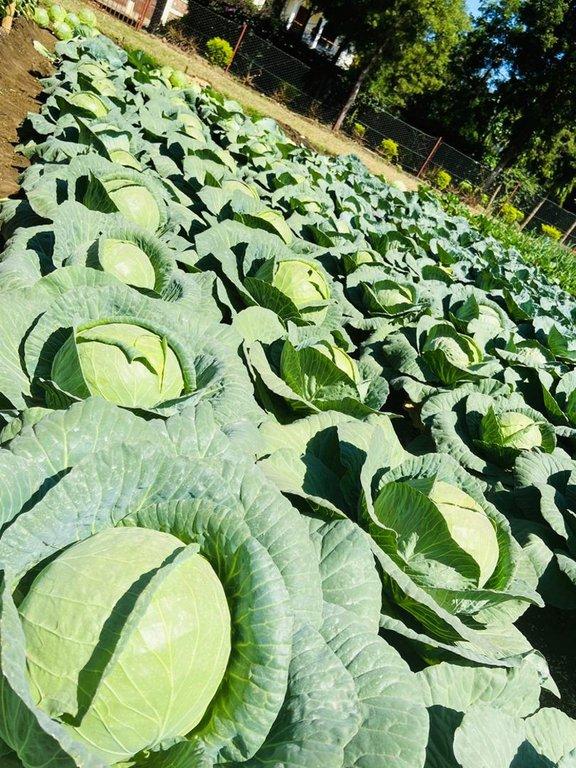
Cabbage is one of the most consistently profitable vegetables a Ugandan farmer can grow — but only if you choose the right variety, prepare your soil properly, and stay ahead of pests. Get these three things right and you can pull 2 to 4 kilograms per head with strong demand from local markets, supermarkets, and traders across the country.
At Home Harvest, we have worked with thousands of cabbage farmers across Uganda. This guide brings together everything we have learned — from soil preparation to pest control — so you can grow with confidence this season.
1. Choosing the Right Variety: The Decision That Determines Your Profit
Before anything else, you need to choose the right cabbage variety for your market, your soil, and your timeline. At Home Harvest, we stock three proven varieties, each with its own strengths.
Delta F1 — The Commercial Farmer's Choice Maturity: 75 days | Head type: Firm, compact, blue-green
Delta F1 is a hybrid variety that brings uniformity and speed. If you are farming at scale and supplying a trader or supermarket that demands consistent sizing, Delta F1 is your answer. It matures in just 75 days and stands up well in the field even after maturity — giving you flexibility in your harvest window. The firm, compact heads are exactly what high-end buyers want.
Copenhagen — The Fresh Market Favourite Maturity: 90 days | Head weight: 2 to 3 kg per head
Copenhagen is one of the most popular open-pollinated varieties in Uganda because it is reliable, affordable to plant, and well-recognised by market traders and consumers. The round, firm heads are easy to transport and sell quickly at local markets. For farmers who want predictable results without the higher cost of hybrid seed, Copenhagen is a proven performer.
Drum Head — Maximum Weight, Maximum Returns Maturity: 75 days | Head weight: 3 to 4 kg per head
If you are selling by weight — and most wholesale transactions in Uganda are — Drum Head gives you the biggest return per plant. At 3 to 4 kilograms per head and ready in just 75 days, this variety is built for volume. Plant it if you have a ready buyer and a reliable water supply. The large, uniform heads are ideal for traders buying in bulk.
2. Soil Preparation: The Foundation of a Good Harvest
Cabbage is a heavy feeder. It demands well-prepared, fertile soil — and shortcuts at this stage will cost you at harvest time.
What cabbage needs in the soil: well-drained loam or sandy loam, a pH between 6.0 and 7.0 (slightly acidic to neutral), and high organic matter content. Poor drainage is one of the leading causes of cabbage crop failure in Uganda — always address this before you plant.
Step 1 — Clear and plough deeply Plough to at least 30cm depth to break up compaction and allow proper root development. Subsoil compaction is one of the most common hidden causes of poor cabbage performance in Uganda.
Step 2 — Apply well-decomposed manure or compost Before planting, incorporate 5 to 10 tonnes of organic matter per acre. This improves water retention, adds nutrients, and feeds the beneficial soil organisms your crop depends on.
Step 3 — Test and correct your soil pH If your soil is too acidic (below pH 6.0), apply agricultural lime at least 2 to 4 weeks before planting. Many farmers skip this step — it makes a significant difference to nutrient availability and final yield.
Step 4 — Apply basal fertiliser At transplanting, use a balanced NPK fertiliser such as NPK 17:17:17 to give your seedlings a strong start. Side-dress with nitrogen-rich fertiliser (CAN or Urea) at 3 to 4 weeks after transplanting to drive leafy growth.
3. Transplanting and Spacing: Get This Right from Day One
Correct spacing determines air circulation, sunlight penetration, and ultimately head size. Crowded cabbage plants compete for nutrients and are far more vulnerable to disease.
- Delta F1: 45cm x 60cm spacing — approximately 16,000 plants per acre
- Copenhagen: 60cm x 45cm spacing — approximately 15,000 plants per acre
- Drum Head: 45cm x 60cm spacing — approximately 16,000 plants per acre
Always transplant seedlings in the evening or on a cool, overcast day to reduce transplant shock. Water immediately after transplanting and keep the soil moist for the first week.
4. Pest and Disease Control: Protect Your Investment
Cabbage is one of the most pest-prone vegetables in Uganda. Without a proper pest management programme, a healthy crop can be destroyed within days. Here are the main threats and how to handle them.
Diamondback Moth (DBM) — The Biggest Threat The diamondback moth larva is the number one destroyer of cabbage in Uganda. The tiny green caterpillars feed on leaves and burrow into developing heads. Signs include small irregular holes and a slimy residue inside the head.
Control: Apply recommended insecticides such as Emmamectin Benzoate or Chlorpyrifos on a weekly rotation. Avoid using the same chemical more than twice consecutively — DBM develops resistance rapidly. Always rotate between chemical classes.
Cutworms Cutworms cut young seedlings at the base, usually at night. They are most destructive in the first two weeks after transplanting.
Control: Apply Chlorpyrifos around the base of plants after transplanting. You can also use a soil drench before transplanting in high-risk areas.
Black Rot (Xanthomonas campestris) Black rot is a bacterial disease spread by contaminated soil, infected seed, and rainy weather. It causes yellowing of leaf margins and a distinctive V-shaped lesion pointing toward the midrib. Once established, it spreads rapidly.
Control: Use certified disease-free seed, practise crop rotation, and remove and destroy infected plants immediately. Copper-based fungicides can slow the spread when applied early.
Aphids Aphids cluster under leaves and on young growing tips, sucking plant sap and spreading viral diseases. A heavy aphid infestation stresses the plant and significantly reduces head size.
Control: Apply systemic insecticides such as Imidacloprid. Introduce beneficial insects where possible and avoid overuse of broad-spectrum insecticides that kill natural predators.
Pro tip: Spray early in the morning or late in the afternoon — never during the heat of the day. This protects beneficial insects, improves chemical efficacy, and reduces crop stress. Keep a spraying log so you can track resistance patterns over time.
5. Watering and Irrigation
Cabbage requires consistent moisture throughout its growing cycle — irregular watering causes splitting heads and poor quality.
- Water every 2 to 3 days during dry spells, more frequently in hot conditions
- Avoid waterlogging — ensure your beds have good drainage at all times
- Drip irrigation is the most efficient option for commercial cabbage farming
- Reduce watering in the final 2 weeks before harvest to improve head firmness and shelf life
6. Harvesting: Timing Is Everything
Harvest cabbage when the head is firm and solid when pressed. Do not wait too long — over-mature heads split quickly and lose market value.
- Delta F1 and Drum Head: harvest at 75 days from transplanting
- Copenhagen: harvest at 90 days from transplanting
- Harvest in the early morning when temperatures are cool — this extends shelf life significantly
- Cut with a sharp, clean knife and leave 2 to 3 outer leaves to protect the head during transport
- Heads can store at ambient temperature for 1 to 2 weeks if kept in a cool, shaded, well-ventilated area
Quick Reference: Cabbage Farming Calendar
Week 1 — Land preparation, soil testing, apply lime if needed, incorporate manure
Week 2 — Raise seedlings in nursery trays or seedbed
Weeks 3 to 4 — Transplant seedlings, apply basal fertiliser, water immediately
Weeks 4 to 5 — First pest scouting, apply preventive insecticide spray
Weeks 5 to 6 — Side-dress with nitrogen fertiliser (CAN or Urea), continue weekly spraying
Weeks 7 to 9 — Monitor for black rot, cutworms, and aphids. Adjust spray programme as needed
Week 10 — Reduce watering, check head firmness
Weeks 11 to 13 — Harvest (depending on variety), transport to market in the early morning
Get Your Cabbage Seeds from Home Harvest
We stock Delta F1, Copenhagen, and Drum Head cabbage seeds — all selected for Uganda's growing conditions. Every seed comes with access to our agronomist support team who can guide you through the entire season.
Call or WhatsApp us: 0393236482 / 0704141827
Email: info@homeharvest.co.ug
Order online: homeharvest.co.ug
Visit us at: Plot 61, Ntinda-Kisaasi Road, Kampala | Plot 30, Bombo Road, Wobulenzi | Kawanda Research Station, Wakiso
Transforming agriculture for a better tomorrow.
#HomeHarvest #CabbageFarming #UgandaAgriculture #QualitySeeds #AgricultureUganda #FarmingUganda
Really good and how can farmers access the variety
Thank you Alia
I am happy with HH Delta F1 variety and recommend to every cabbage farmer