Home Harvest Guide: How to Grow Red Creole Onions Successfully in Uganda
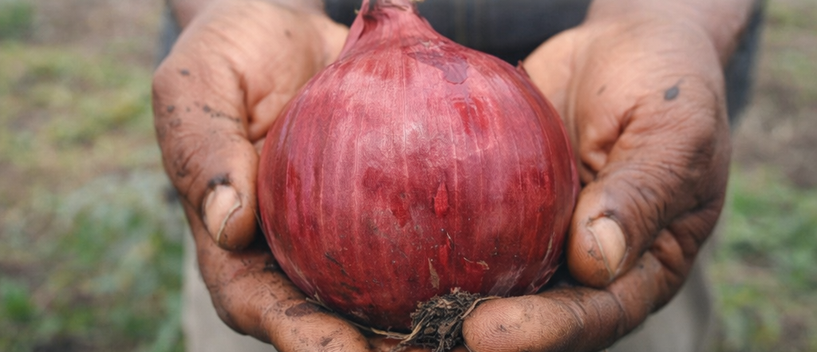
Red Creole is one of the most trusted onion varieties in Uganda—known for its deep red bulbs, strong pungency, and high market demand.
🧅 Home Harvest Guide: How to Grow Red Creole Onions Successfully in Uganda
Red Creole is one of the most trusted onion varieties in Uganda—known for its deep red bulbs, strong pungency, and high market demand. For farmers who want serious yields and reliable income, this variety is a proven performer.
In this Home Harvest guide, we go deep into how to grow Red Creole onions step-by-step, including soil requirements, climate, challenges, and how to maximize yield in Ugandan conditions.
🌱 About Red Creole Onion (Home Harvest Variety)
Red Creole is a short-day onion variety, meaning it performs very well in tropical climates like Uganda.
✔️ Key Characteristics:
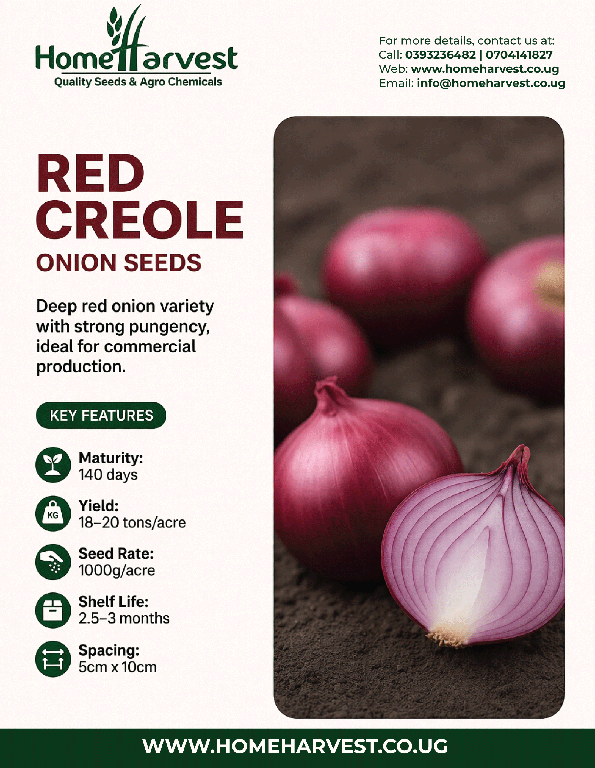
- Maturity: ~140 days
- Yield: 18–20 tons per acre
- Strong pungent flavor (high market demand)
- Shelf life: 2.5–3 months
- Spacing: 5cm × 10cm
👉 It produces firm, red, flat-round bulbs suitable for both home consumption and commercial sale
🌍 Best Areas to Grow Red Creole in Uganda
Red Creole adapts widely, but performs best in:
✔️ Ideal regions:
- Central Uganda
- Eastern Uganda
- Western Uganda
✔️ Environmental conditions:
- Temperature: 15°C – 30°C
- Altitude: Below 1900m above sea level
- Requires moderate rainfall or irrigation
👉 Too much rain or waterlogging can destroy the crop, while drought reduces bulb size.
🌾 Soil Requirements (Most Critical Factor)
If you get soil wrong, you lose everything.
✔️ Best soil type:
- Sandy loam or loamy soil
- Deep, friable (soft and loose)
- Rich in organic matter
- Well-drained
✔️ Soil pH:
- Ideal: 6.0 – 7.0
❌ Avoid:
- Heavy clay soils → cause rotting and deformed bulbs
- Waterlogged soils → lead to fungal diseases
- Very acidic soils → reduce nutrient uptake
👉 Onions are very sensitive to poor drainage and acidic conditions.
🌱 Nursery Establishment (Where Success Begins)
Red Creole onions are best started in a nursery before transplanting.
✔️ Steps:
- Prepare a fine seedbed
- Mix compost or manure into soil
- Sow seeds thinly in rows
- Cover lightly with soil (1–2 cm deep)
- Water gently and regularly
⏳ Germination takes 7–15 days in warm conditions
✔️ Nursery period:
- 6–8 weeks before transplanting
👉 Healthy seedlings = strong final yield
🌿 Transplanting to Main Garden
When seedlings reach pencil thickness or 10–15 cm height:
✔️ Spacing:
- Between plants: 5–10 cm
- Between rows: 20–30 cm
✔️ Tips:
- Transplant in evening or early morning
- Water immediately after transplanting
- Do not plant too deep
👉 Proper spacing ensures bigger bulbs and less disease
💧 Watering Management (Very Sensitive Crop)
Onions require consistent but controlled moisture.
✔️ During growth:
- Water regularly to keep soil moist
- Avoid drying out
✔️ During bulb formation:
- Reduce watering slightly
✔️ Before harvest:
- Stop watering completely
👉 Lack of water = small, pungent bulbs
👉 Too much water = rot and disease
🌿 Fertilizer Program (For Maximum Yield)
Red Creole requires balanced feeding.
✔️ Recommended approach:
- Apply compost or manure before planting
- Use NPK fertilizer early (for leaf growth)
- Reduce nitrogen during bulb formation
👉 Too much nitrogen late = large leaves but small bulbs
🌱 Weeding & Field Management
Onions are weak competitors.
✔️ Important practices:
- Weed regularly (especially early stages)
- Avoid deep cultivation (roots are shallow)
👉 Clean fields = higher yields
🐛 Pests and Diseases (Major Challenges in Uganda)
🐛 Common pests:
- Thrips (most serious)
- Onion flies
👉 They damage leaves and reduce bulb size
🦠 Common diseases:
- Fungal rot (from poor drainage)
- Downy mildew
- Fusarium
👉 These thrive in:
- Wet soils
- Overcrowded fields
✔️ Control measures:
- Crop rotation
- Proper spacing
- Well-drained soil
- Use of organic sprays (e.g., neem)
👉 Prevention is cheaper than cure
⚠️ Major Challenges Farmers Face
1. Poor Soil Drainage
- Leads to root rot and total crop loss
2. Inconsistent Watering
- Causes small or split bulbs
3. Wrong Fertilizer Use
- Too much nitrogen reduces bulb formation
4. Pest Pressure (especially thrips)
- Reduces yield significantly
5. Wrong Timing
- Planting at the wrong season reduces bulbing
👉 Onion farming rewards precision and discipline
🧅 Bulb Formation (Critical Stage)
This is where profit is determined.
- Bulbs form under correct daylight and temperature
- Warm conditions support bulbing
- Excess heat speeds maturity but reduces size
👉 Balanced conditions = large, firm bulbs
✂️ Harvesting Red Creole Onions
✔️ Signs of maturity:
- Leaves turn yellow
- Tops fall over
👉 Usually after 110–140 days
✔️ How to harvest:
- Pull bulbs gently
- Harvest during dry weather
☀️ Curing and Storage
After harvesting:
- Dry onions under shade or sun for several days
- Allow outer skins to dry completely
- Store in a dry, well-ventilated place
👉 Proper curing improves storage life to 2–3 months
💰 Why Red Creole is a Profitable Crop
- High demand in Ugandan markets
- Good shelf life
- Strong flavor preferred by consumers
- Reliable yields under good management
👉 A well-managed acre can produce 18–20 tons of onions
🌿 Final Word from Home Harvest
Red Creole onion is not just a crop—it’s a business opportunity.
But success depends on:
- Soil preparation
- Water control
- Proper spacing
- Timely management
If you get these right, you will produce uniform, high-quality bulbs that sell quickly and profitably.
🌱 Home Harvest Tip:
Start with proper nursery management and soil preparation—these two stages determine over 60% of your success.
I already sown half akilo can it plant half an acre